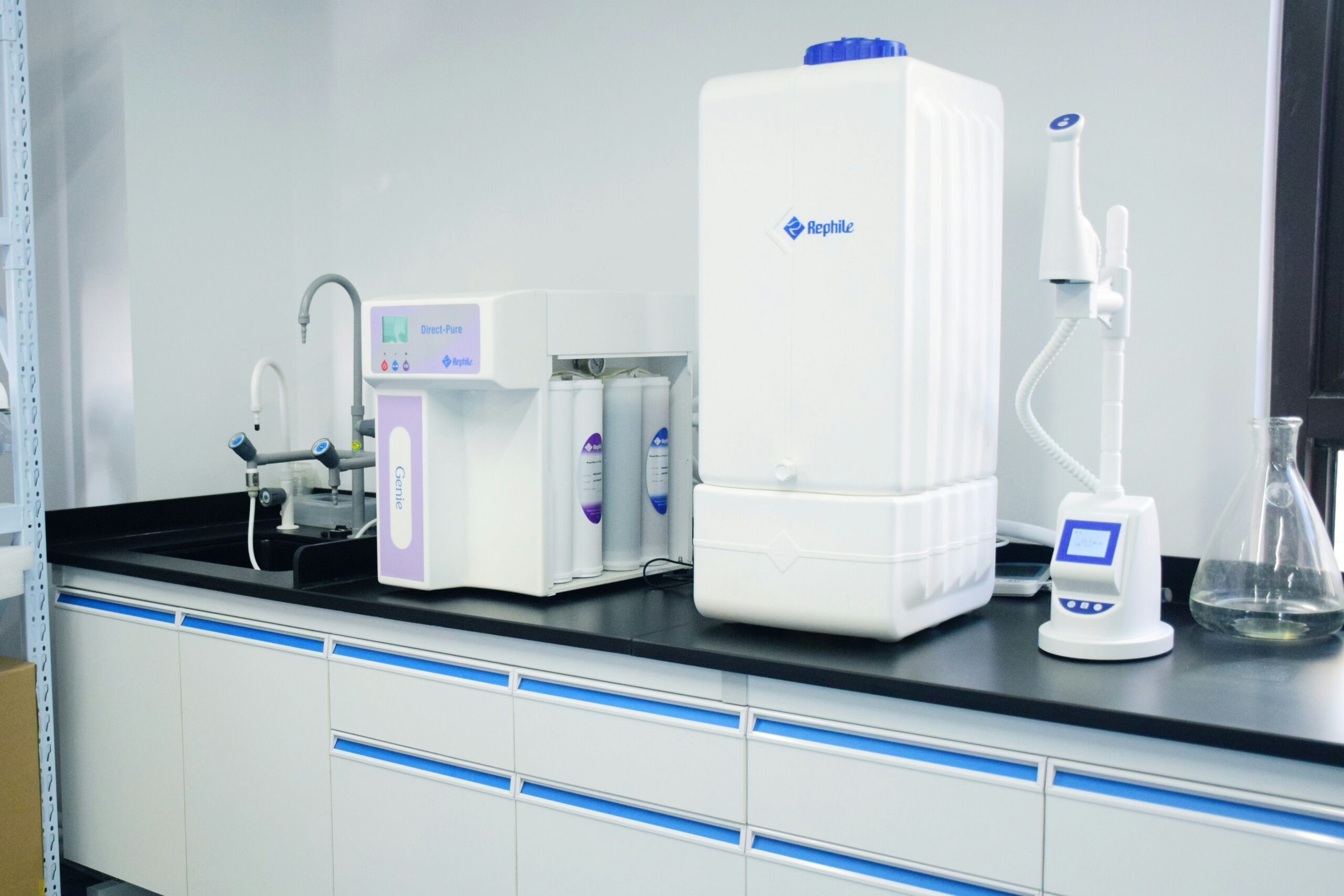
Water purification systems play a vital role in providing clean, safe drinking water worldwide. As global demand for fresh water increases, scientists and engineers continue to combine chemistry and technology to improve purification methods. These systems rely on chemical reactions and advanced technologies to remove contaminants, making water safe for human use. Therefore, understanding how chemistry and technology work together in purification systems highlights their importance for public health, sustainability, and environmental protection.
The Science Behind Water Purification Systems
Chemistry underpins water purification systems by explaining how contaminants interact with various substances. For example, chemical processes such as coagulation and flocculation help remove suspended particles from water. In these processes, chemicals like aluminum sulfate bind small particles together, forming larger clumps that are easier to remove. As a result, water becomes clearer and safer for further treatment.
Moreover, chemical disinfection plays a key role in killing harmful microorganisms. Chlorine, ozone, and ultraviolet light are commonly used to eliminate bacteria and viruses. While chlorine reacts with pathogens to destroy them, ozone provides a strong oxidation process that breaks down pollutants. Therefore, chemistry ensures that purification systems effectively remove both visible and invisible contaminants.
The Role of Filtration Technologies
Modern filtration technologies greatly enhance water purification systems by removing impurities at different stages. Mechanical filtration, for instance, uses physical barriers such as sand or membranes to trap particles. These filters vary in size, allowing them to capture anything from large debris to microscopic contaminants. Consequently, filtration acts as a critical step in producing clean water.
In addition, advanced technologies such as reverse osmosis have transformed purification methods. Reverse osmosis uses pressure to force water through a semi-permeable membrane, leaving contaminants behind. This process removes dissolved salts, heavy metals, and harmful chemicals. Therefore, technological innovation continues to improve the efficiency and reliability of purification systems.
Chemical Treatment and Disinfection Methods
Chemical treatment methods ensure that purification systems effectively eliminate harmful substances. Coagulation, sedimentation, and chemical precipitation help remove impurities before final filtration. These processes rely on precise chemical reactions that separate contaminants from water. As a result, water treatment becomes more efficient and consistent.
Furthermore, disinfection methods protect public health by preventing waterborne diseases. Chlorination remains one of the most widely used techniques because it is effective and affordable. However, newer methods such as ultraviolet disinfection offer a chemical-free alternative. Therefore, combining traditional and modern approaches strengthens water purification systems and improves safety.
The Impact of Nanotechnology in Water Purification Systems
Nanotechnology has introduced innovative solutions to water purification systems by improving filtration and chemical reactions. Nanomaterials, such as carbon nanotubes and graphene, have unique properties that allow them to remove contaminants more efficiently. These materials have a large surface area, which increases their ability to trap pollutants. As a result, water purification becomes faster and more effective.
Additionally, nanotechnology enhances chemical processes by increasing reaction rates. For example, nanoparticle technology can break down harmful chemicals through advanced oxidation processes. This approach removes even the most stubborn contaminants from water. Therefore, nanotechnology represents a major advancement in the future of purification systems.
Sustainable Solutions in Water Purification Systems
Sustainability is an important factor in modern purification systems, as resources must be used efficiently. Many systems now focus on reducing chemical use and energy consumption. For instance, solar-powered purification systems use renewable energy to treat water in remote areas. As a result, communities gain access to clean water without harming the environment.
Moreover, eco-friendly materials and processes help minimize waste and pollution. Biodegradable filters and natural coagulants offer alternatives to traditional chemicals. These solutions reduce environmental impact while maintaining effectiveness. Therefore, sustainable practices are shaping the future of water purification systems worldwide.
The Integration of Smart Technology
Smart technology has significantly improved the performance of water purification systems by enabling real-time monitoring and control. Sensors can detect changes in water quality and automatically adjust treatment processes. For example, smart systems monitor pH levels, turbidity, and chemical concentrations. As a result, operators can respond quickly to ensure consistent water quality.
In addition, data analytics helps optimize system performance and reduce operational costs. By analyzing data, engineers can identify patterns and improve efficiency. Smart technology also allows remote management, which is especially useful in large-scale systems. Therefore, integrating digital tools enhances the reliability and effectiveness of purification systems.
Challenges in Water Purification Systems
Despite advancements, purification systems still face several challenges. Contaminants such as microplastics and emerging pollutants require more advanced treatment methods. These substances are difficult to remove using traditional techniques. As a result, researchers must continue to develop new chemical and technological solutions.
Furthermore, access to clean water remains a global issue, especially in developing regions. High costs and limited infrastructure limit the use of advanced systems. However, innovation and investment can help overcome these barriers. Therefore, addressing these challenges is essential for improving water purification systems worldwide.
Future Trends in Water Purification Systems
The future of water purification systems depends on continued innovation in chemistry and technology. Researchers are exploring new materials and methods to improve efficiency and reduce costs. For example, advanced membranes and hybrid systems combine multiple purification techniques. As a result, these systems provide better performance and reliability.
Additionally, artificial intelligence and automation will play a larger role in water treatment. These technologies can predict system performance and optimize processes in real time. As innovation continues, water purification systems will become more efficient, accessible, and sustainable. Therefore, the combination of chemistry and technology will remain essential in ensuring clean water for future generations.